Have you ever seen both “wack” and “whack” online and wondered which one is correct? Many people search for “wack or whack” because the two words look almost the same but have very different meanings. The confusion often comes from slang, social media, and changes in modern English.
“Whack” is the older and more common spelling. It can mean a hit, a strike, or a strange amount of something. “Wack” is a newer slang spelling that usually means bad, strange, or low quality. Knowing the difference helps writers avoid mistakes in messages, articles, schoolwork, and professional communication.
This guide explains the origin of both words, how British and American English use them, which spelling to choose, and common errors people make. Whether you are writing online content, sending an email, or improving your English skills, understanding “wack or whack” makes your writing clearer.
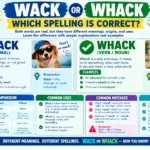
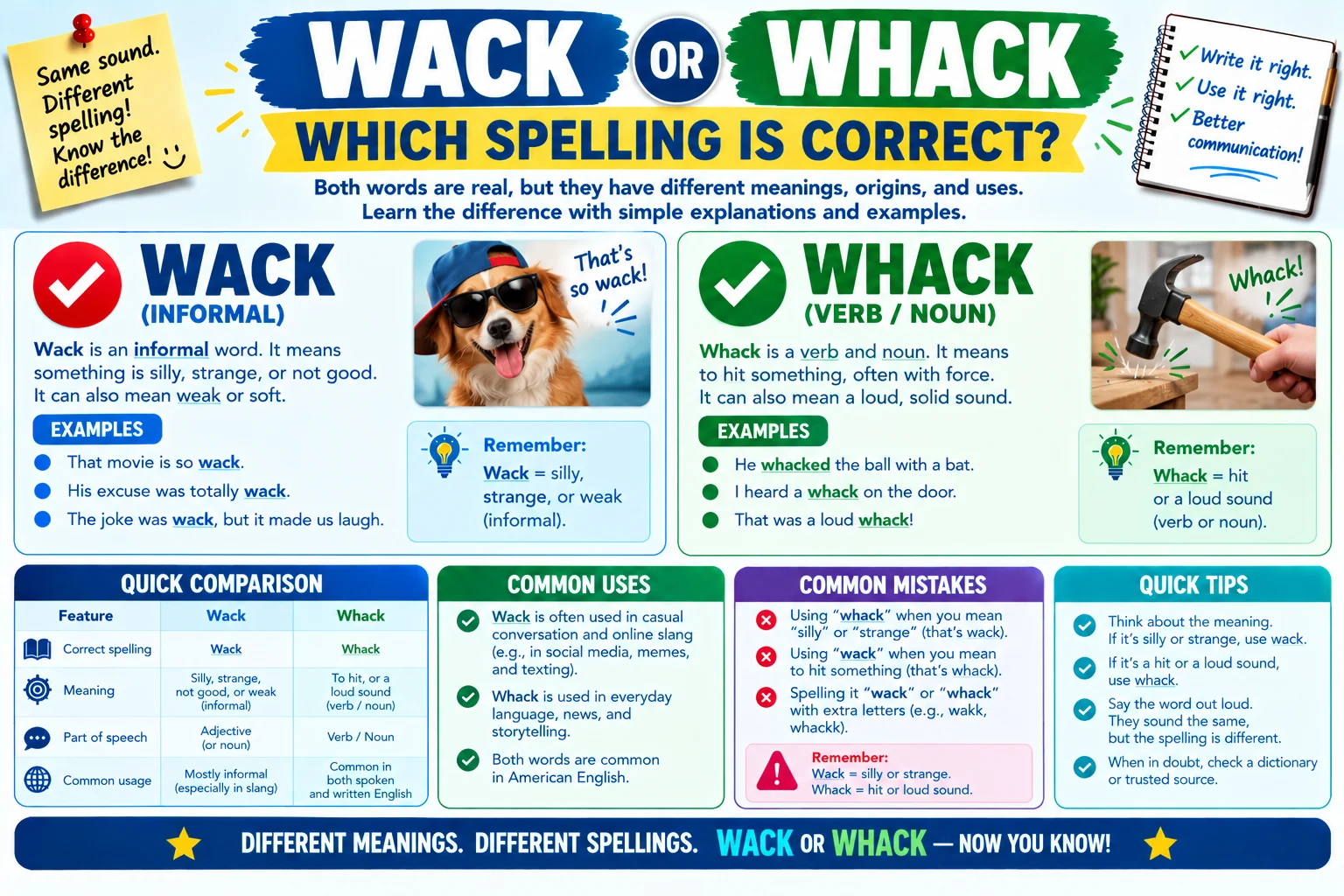
The quick answer is:
- Whack is the standard English word. It means a hit, strike, or unusual amount.
- Wack is informal slang. It means bad, strange, boring, or disappointing.
Examples:
- “He gave the ball a hard whack.”
- “That movie was really wack.”
Use whack in normal writing. Use wack only when writing casual slang, conversations, music, or social media content.
The Origin of Wack or Whack
The word whack has a long history in English. It comes from the sound of a sharp hit or blow. English speakers used it to describe striking something, and over time it became a regular verb and noun.
The slang word wack developed later, especially through American street language, hip-hop culture, and youth conversations. It became a way to describe something as poor, strange, or disappointing.
The spelling difference exists because slang often changes words to create a different style or identity. “Wack” is not simply a spelling mistake. It developed as a separate informal word with its own meaning.
British English vs American English Spelling
British and American English usually spell whack the same way. The main difference is not spelling rules but meaning and usage.
American English uses wack more often as slang, especially in entertainment, music, and online conversations. British English speakers understand “wack,” but it is less common.
| Word | English Style | Meaning | Example |
|---|---|---|---|
| Whack | British and American English | Hit, strike, unusual amount | “The stick made a loud whack.” |
| Wack | Mostly American slang | Bad, strange, poor quality | “That idea is wack.” |
Comparison of variations:
| Variation | Correct Use | Formal or Informal? | Example |
|---|---|---|---|
| Whack | Standard word | Formal and informal | “The box took a whack during transport.” |
| Wack | Slang expression | Informal only | “This song is wack.” |
| Whacked | Past form or slang meaning tired/confused | Depends on context | “I was whacked after work.” |
Which Spelling Should You Use?
Your choice depends on your audience and purpose.
For US readers:
Use “whack” for standard meanings. Use “wack” only for slang, casual writing, or cultural references.
For UK and Commonwealth readers:
Use “whack” in most situations. “Wack” may sound unfamiliar or strongly connected to American slang.
For global audiences:
Choose “whack” when writing professional content. Avoid “wack” unless you clearly mean slang.
In business emails, reports, academic writing, and official documents, “wack” should usually be avoided.
Common Mistakes with Wack or Whack
Many writers confuse these words because they sound similar.
Common mistakes include:
- Writing “That product is whack” when they mean it is bad.
- Better: “That product is wack” for slang.
- Writing “He gave it a wack” when they mean a hit.
- Correct: “He gave it a whack.”
- Using wack in formal writing.
- Better: Use words like “poor,” “strange,” “unusual,” or “low quality.”
Remember: whack = hit or amount; wack = slang for bad or strange.
Wack or Whack in Everyday Examples
Emails
Formal:
- “The machine received a strong whack during shipping.”
Informal:
- “That update sounds kind of wack.”
News Writing
News articles usually use whack because it is a standard English word.
Example:
- “The player took a whack to the shoulder.”
Writers normally avoid wack unless reporting a quote.
Social Media
Social media uses wack more often.
Examples:
- “That new design is wack.”
- “This trend is completely wack.”
Formal Writing
Use alternatives instead of slang:
Instead of:
- “The plan is wack.”
Write:
- “The plan is ineffective.”
- “The plan needs improvement.”
Wack or Whack – Google Trends & Usage Data
Search interest for “wack or whack” comes mainly from people checking spelling and meaning differences. The phrase is popular because online writing has increased the use of slang.
In the United States, searches for wack are often connected with slang, music, entertainment, and social media. Searches for whack appear in wider contexts, including sports, writing, and everyday vocabulary.
In the United Kingdom, Canada, Australia, and other English-speaking countries, people are more likely to search for the correct spelling because “wack” is less common in everyday speech.
Overall, “whack” has broader global usage, while “wack” appears more often in informal digital communication.
Frequently Asked Questions
1. Is “wack” or “whack” correct?
Both can be correct, but they have different meanings. “Whack” is the standard word, while “wack” is slang.
2. Does “wack” mean bad?
Yes. In slang, “wack” means bad, strange, boring, or disappointing.
3. Is “whack” a British word?
Yes. “Whack” is used in both British and American English.
4. Can I use “wack” in professional writing?
Usually no. It is informal slang and may not suit business or academic writing.
5. Why do people spell it “wack”?
People spell it “wack” because slang often changes spelling to create a unique style or meaning.
6. Is “whack” only used for hitting?
No. “Whack” can also mean an amount or share, such as “a whack of money.”
7. Are “wack” and “whack” pronounced the same?
Yes. They are usually pronounced the same, which causes spelling confusion.
Conclusion
The difference between “wack or whack” is simple once you know the meaning behind each word. Whack is the standard English spelling and works in both formal and casual writing. It describes a hit, strike, or amount. Wack is slang and is mainly used to describe something bad, strange, or disappointing.
For professional writing, school assignments, and global communication, choose whack or a clearer formal word. Use wack only when you want an informal tone, such as in social media posts, conversations, or cultural writing.
Understanding this small spelling difference helps prevent mistakes and improves your English accuracy. Words can change through culture and online communication, but choosing the right form depends on your audience and purpose. When in doubt, remember: whack is standard, and wack is slang.
Throught or Through: Which Spelling Is Correct?

I am an English Literature expert and professional content writer with a passion for language, grammar, and effective communication. I specialize in creating well-researched, reader-friendly articles on English usage, spelling, vocabulary, writing techniques, and literary topics. My goal is to simplify complex concepts and provide accurate, engaging content that helps readers strengthen their language skills and communicate with confidence.