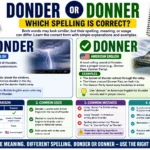
Have you ever written Santa’s reindeer names and stopped at one word: Donder or Donner? You are not alone. This small spelling question causes a surprising amount of confusion every Christmas.
The confusion comes from history. The famous Christmas poem A Visit from St. Nicholas, first published in 1823, originally used the names Dunder and Blixem. Later versions changed these names. Clement Clarke Moore’s 1844 version used Donder and Blitzen. Later books, songs, and popular culture helped make Donner and Blitzen the most familiar pair today.
So, is Donder wrong? No. Is Donner wrong? No. Both forms have a real history. However, they are not simply British and American spellings of the same English word.
This guide explains the difference between Donder or Donner, where each spelling came from, which form you should use, and why modern readers often expect Donner.
If you mean Santa Claus’s seventh reindeer, both Donder and Donner are established forms.
- Donder is the form used in Clement Clarke Moore’s 1844 version of A Visit from St. Nicholas.
- Donner became common later and is now the more familiar form in modern English, especially through Rudolph the Red-Nosed Reindeer.
- The original 1823 publication actually used Dunder and Blixem.
- Donder is also the Dutch word for “thunder.”
- Donner is the German word for “thunder.”
Quick example:
Santa’s reindeer include Dasher, Dancer, Prancer, Vixen, Comet, Cupid, Donner, and Blitzen.
This is the safest modern form for most English-language readers.
The Origin of Donder or Donner
The story starts with the 1823 poem A Visit from St. Nicholas, commonly called The Night Before Christmas. The poem introduced the famous group of eight reindeer.
In the first published version, the final two were called Dunder and Blixem. These names were linked to Dutch words for thunder and lightning.
Later versions changed the names. By 1844, the version associated with Clement Clarke Moore used Donder and Blitzen. A handwritten version attributed to Moore also supports the spelling Donder.
The form Donner appeared later in other publications. It became strongly established in popular culture through Robert L. May’s 1939 Rudolph the Red-Nosed Reindeer story and Johnny Marks’s 1949 song.
There is also a language connection. Dutch donder means “thunder,” while German Donner means “thunder.” German Blitzen relates to lightning.
This explains why the two spellings look so similar.
British English vs American English Spelling
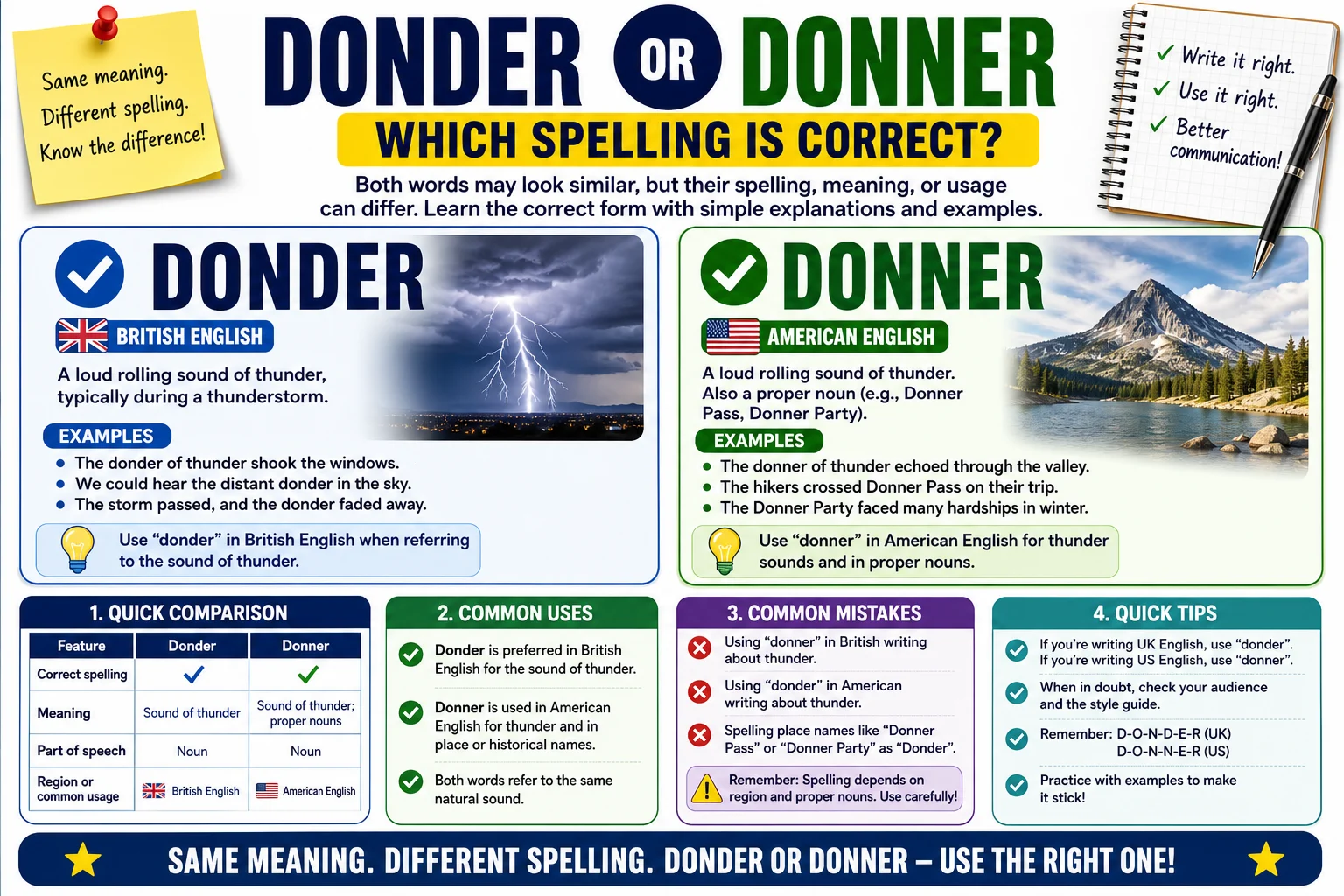
A common mistake is to think Donder is British English and Donner is American English.
That is not quite right.
Unlike pairs such as colour/color or centre/center, Donder and Donner are not standard British and American spelling rules. They are historical forms of a reindeer’s name.
| Feature | Donder | Donner |
|---|---|---|
| Main use | Historical and literary form | Modern popular form |
| Famous association | A Visit from St. Nicholas | Rudolph the Red-Nosed Reindeer |
| Language link | Dutch “thunder” | German “thunder” |
| British English | Used, but not a special British spelling | Used, especially in modern Christmas writing |
| American English | Recognized | Very common |
| Correct for Santa’s reindeer? | Yes | Yes |
| Best general choice today | Good for historical accuracy | Best for broad modern recognition |
For normal English writing, do not describe Donder as the British spelling or Donner as the American spelling. The history is more complex.
Donder or Donner – Comparison Table
| Variation | What it is | Where it appears |
|---|---|---|
| Dunder | Earliest published form | 1823 poem |
| Donder | Later historical form | Moore’s 1844 version |
| Donner | Modern popular form | Later books, songs, and media |
| Donder and Blitzen | Historical reindeer pair | Older versions of the poem |
| Donner and Blitzen | Modern familiar pair | Modern Christmas writing |
| Donder/Dunder | Historical variants | Discussions of the poem |
| Donner/Donder | Modern spelling alternatives | General English usage |
The important point is that these forms developed over time. They are not simply two fixed regional spellings.
Which Spelling Should You Use?
Your best choice depends on your audience and purpose.
For US readers
Use Donner in most modern writing. It is the form most readers are likely to recognize.
Example:
Santa’s reindeer are Dasher, Dancer, Prancer, Vixen, Comet, Cupid, Donner, and Blitzen.
For UK and Commonwealth readers
Donner is also safe and widely understood. If you are discussing the original poem or its history, Donder may be more suitable.
For academic or historical writing
Use the spelling that matches the source you are discussing.
For example:
Moore’s 1844 version gives the name as Donder.
Do not silently change an original historical spelling to Donner.
For global websites
Use Donner as the main modern form, but mention Donder early in the article.
For SEO, a sentence such as this works well:
Donner, also known as Donder, is one of Santa Claus’s traditional eight reindeer.
This captures both search terms while helping readers understand the difference.
Common Mistakes with Donder or Donner
Mistake 1: Saying Donder is always wrong
Incorrect idea: “The correct spelling is only Donner.”
Better: Both forms have historical support. Donder appears in Moore’s 1844 version, while Donner became dominant later.
Mistake 2: Saying Donder is British English
Incorrect: “British people spell it Donder.”
Better: Donder is a historical form. It is not a standard British spelling rule.
Mistake 3: Forgetting Dunder
Many people know only Donder and Donner. However, the original 1823 publication used Dunder and Blixem.
Mistake 4: Mixing German and Dutch
Donder is Dutch for “thunder.” Donner is German for “thunder.” The reindeer names have passed through several historical forms, so the language story is not as simple as “one is right and one is wrong.”
Mistake 5: Assuming the song proves the original spelling
The popular Christmas song uses Donner. That helped make Donner the modern favorite, but the song is not the original source of the reindeer names.
Donder or Donner in Everyday Examples
In an email
Our office Christmas event will include a quiz about Santa’s reindeer, including Donner and Blitzen.
For a normal email, Donner is the easiest choice.
In a news article
Historians continue to discuss the changing spelling of the reindeer’s name, from Dunder to Donder and later Donner.
This style is better when the spelling itself is the topic.
On social media
Quick Christmas question: Is it Donder or Donner? 🎄
This is a natural way to start a discussion.
In formal writing
The 1844 version of A Visit from St. Nicholas uses the spelling “Donder.”
Formal writing should match the historical source being discussed.
In SEO content
A useful sentence is:
Donder or Donner? Both spellings refer to the same famous Santa reindeer, but Donner is more common in modern English.
This directly answers the search query.
Donder or Donner – Google Trends & Usage Data
Search interest in Donder or Donner is strongly seasonal. People are much more likely to search for the terms around Christmas than during most of the year.
Public discussions and search results also show a clear modern preference for Donner. Historical references, however, often favor Donder, especially when discussing Moore’s poem. A 1994 Washington Post investigation even examined the dispute and noted that Donder is the Dutch form for “thunder.”
There is an important SEO lesson here: search popularity and historical correctness are not the same thing.
For modern English content:
- Donner has stronger mainstream recognition.
- Donder has strong historical value.
- Dunder matters when discussing the original 1823 text.
- Interest in all three rises around Christmas.
- Search intent is usually informational, such as “Donder or Donner?” or “What is Santa’s reindeer called?”
Older web discussions also show a strong preference for Donner in general search usage, although those figures are historical and should not be treated as current Google Trends data.
For current SEO work, use Donder or Donner as the main topic and include all important historical variants naturally. Avoid keyword stuffing.
FAQs About Donder or Donner
1. Is it Donder or Donner?
Both spellings are used for Santa’s seventh reindeer. Donder is the historical form found in Moore’s 1844 version, while Donner is the common modern form.
2. Which spelling is more common today?
Donner is generally more familiar to modern English readers, especially because of Rudolph the Red-Nosed Reindeer and its popular song.
3. Was the reindeer originally called Donder?
Not exactly. The first published version of the poem in 1823 called the reindeer Dunder. Later versions used Donder.
4. What does Donder mean?
Donder is the Dutch word for “thunder.”
5. What does Donner mean?
Donner is the German word for “thunder.”
6. Is Donder the British spelling and Donner the American spelling?
No. These are historical variants, not a simple British-versus-American spelling difference.
7. Which spelling should I use?
Use Donner for most modern general writing. Use Donder when discussing the historical poem or when you want to preserve Moore’s 1844 spelling.
Conclusion
The Donder or Donner question has a simple answer, but its history is surprisingly rich. Both spellings are connected to Santa Claus’s famous reindeer, but neither should be treated as a simple British or American spelling.
The first published version of A Visit from St. Nicholas in 1823 used Dunder and Blixem. Later versions changed the names to Donder and Blitzen. Over time, Donner and Blitzen became the familiar modern pair. Popular books and the famous Rudolph the Red-Nosed Reindeer song helped make Donner especially well known.
For everyday English, Donner is the safest choice because most readers will recognize it immediately. For historical writing, Donder is important because it appears in Moore’s 1844 version. If your article targets searchers asking “Donder or Donner?”, mention both forms and explain the history clearly.
In short: Donner is the common modern form; Donder is a valid historical form; Dunder is the earliest published form. Knowing all three removes the confusion.
Yall or Y’all: Which Spelling Is Correct? Complete Grammar Guide

I am an English Literature expert and professional content writer with a passion for language, grammar, and effective communication. I specialize in creating well-researched, reader-friendly articles on English usage, spelling, vocabulary, writing techniques, and literary topics. My goal is to simplify complex concepts and provide accurate, engaging content that helps readers strengthen their language skills and communicate with confidence.