Have you ever typed “okey” or “okay” and wondered which one is right? You are not alone. Millions of people search for this phrase because both spellings look familiar, but many writers are unsure which version sounds correct. The confusion often appears in emails, school writing, business messages, and online conversations.
The word is used every day to show agreement, approval, acceptance, or that something is fine. However, the spelling choice can change how professional or natural your writing feels. “Okay” is the most common spelling in modern English, while “okey” appears less often and is usually linked to informal use or specific languages and regions.
This guide explains the difference between okey or okay, where these spellings came from, how British and American English use them, and which form you should choose. Whether you are writing a formal report, a social media post, or a simple message, this article will help you use the right spelling with confidence.
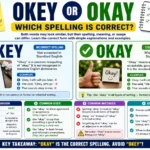
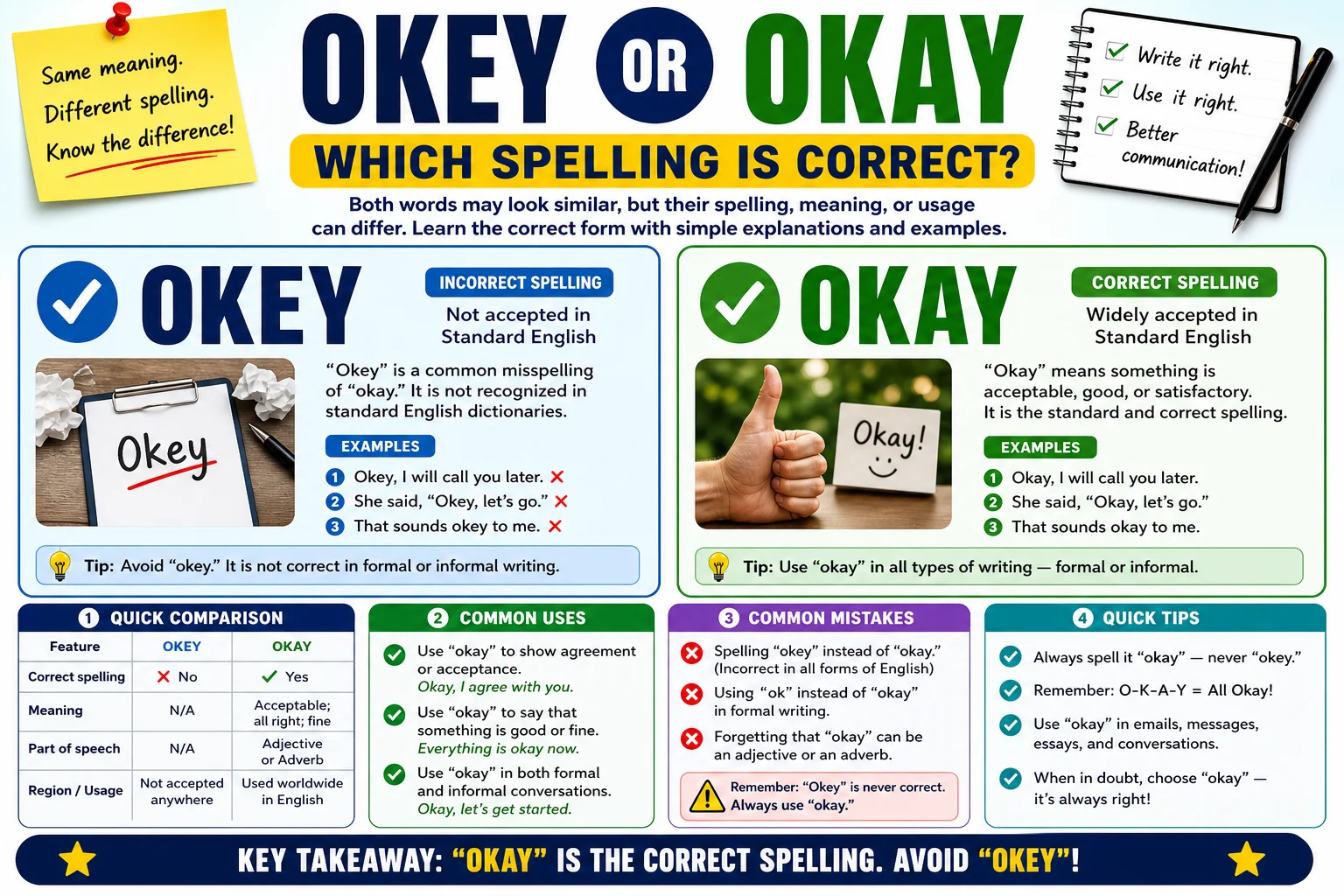
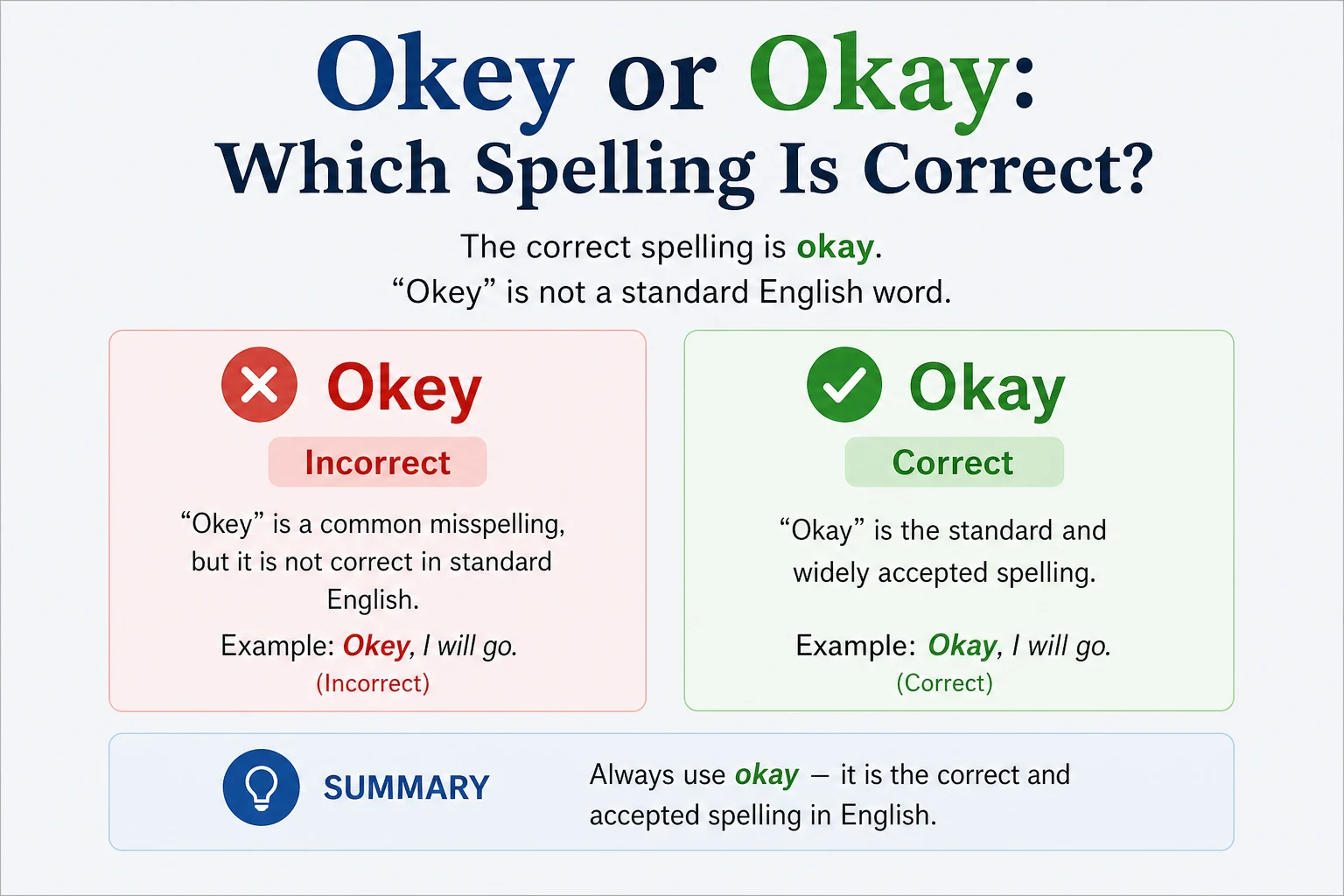
The correct and most widely accepted spelling in English is okay.
Examples:
- “Okay, I will complete the task tomorrow.”
- “Is everything okay?”
- “The plan is okay with me.”
Okey is sometimes used, but it is much less common in standard English. It may appear as a casual spelling, a name, or in some non-English languages. For professional English writing, okay is the safer choice.
Okey vs Okay Comparison Table
| Spelling | Common Use | Accepted in English? | Example |
|---|---|---|---|
| Okay | Standard English writing and speech | Yes | “Okay, let’s start.” |
| OK | Short form, common in messages and business | Yes | “The report is OK.” |
| Okey | Rare or informal variation | Limited | “Okey” in casual chats |
The Origin of Okey or Okay
The history of okay is interesting because its exact origin has been debated. Most language experts connect it to the early 19th century in the United States.
One popular explanation is that “OK” came from the phrase “oll korrect,” a humorous misspelling of “all correct.” This joke became popular in newspapers and later turned into the word “OK.”
Over time, people began writing the full form as okay. The spelling “okey” developed as a less common variation. Different languages and regions sometimes adapted the sound in their own ways, which helped create other spellings.
Today, “okay” is recognized worldwide and is used in many types of communication, from casual conversations to professional documents.
British English vs American English Spelling
British and American English usually agree on the spelling okay. Unlike words such as “color” and “colour,” there is no major national spelling difference.
However, usage styles can vary:
- Americans often use “OK” and “okay” frequently in everyday speech and writing.
- British speakers also use “okay,” but may prefer more traditional phrases in formal writing.
- Commonwealth countries generally accept “okay” as the standard form.
| Feature | American English | British English |
|---|---|---|
| Common spelling | Okay / OK | Okay / OK |
| Alternative spelling | Okey (rare) | Okey (rare) |
| Formal writing | Okay is accepted | Okay is accepted |
| Casual messages | OK is very common | OK is very common |
Which Spelling Should You Use?
Your choice depends on your audience and purpose.
For American readers:
Use okay or OK. Both are widely understood.
For British and Commonwealth readers:
Use okay in most writing. It is clear and accepted.
For global communication:
Choose okay because it is the most recognized spelling internationally.
For formal documents, reports, and professional emails, “okay” is usually better than “OK” because it looks more like a complete word. In short messages, “OK” is perfectly normal.
Common Mistakes with Okey or Okay
Many writers make small mistakes when using this word.
Mistake 1: Using “okey” in formal writing
Incorrect:
- “The proposal is okey.”
Better:
- “The proposal is okay.”
Mistake 2: Thinking “OK” and “okay” have different meanings
Both forms mean the same thing.
Examples:
- “OK, I understand.”
- “Okay, I understand.”
Mistake 3: Overusing the word
Although “okay” is useful, repeating it too often can make writing sound weak.
Instead of:
- “The idea is okay, and the result is okay.”
Try:
- “The idea is acceptable, and the result is satisfactory.”
Okey or Okay in Everyday Examples
In Emails
Professional:
“Okay, I have reviewed the document and will send feedback today.”
In News Writing
News articles often use “okay” when reporting conversations or public comments.
Example:
“The official said the new plan was okay after several reviews.”
On Social Media
Casual posts often use “OK” or “okay.”
Examples:
- “Okay, this movie was amazing!”
- “OK, I finally finished the project.”
In Formal Writing
Use “okay” carefully. In academic or legal writing, words like “acceptable,” “approved,” or “satisfactory” may be better.
Okey or Okay – Google Trends & Usage Data
Search interest for okay is much higher than okey because “okay” is the standard English spelling used worldwide.
People commonly search for this keyword when they:
- Check spelling before writing.
- Need help with professional communication.
- Learn English as a second language.
- Compare regional spelling habits.
The word “okay” is especially popular in countries where English is widely used, including the United States, the United Kingdom, Canada, Australia, and India. “Okey” appears more often in casual searches, language comparisons, or regions where alternative spellings are common.
Okey or Okay Variations Side by Side
| Variation | Meaning | Best Use |
|---|---|---|
| Okay | Correct standard spelling | All types of writing |
| OK | Short version | Messages and quick notes |
| Okey | Rare variation | Avoid in professional English |
| Ok | Informal short form | Casual communication |
FAQs About Okey or Okay
1. Is okey or okay correct?
Okay is the correct and most common spelling in English. “Okey” is a rare variation.
2. Is OK the same as okay?
Yes. “OK” is the shorter form of “okay” and has the same meaning.
3. Should I write okay in a formal email?
Yes. “Okay” is acceptable in many professional emails, although more specific words may sound better in formal situations.
4. Do British people use okay?
Yes. British English accepts and uses “okay.”
5. Why do people spell okay as okey?
Some people write “okey” because it matches pronunciation or because of influence from other languages.
6. Is okay a real English word?
Yes. “Okay” is a standard English word recognized in dictionaries.
7. Which spelling is better for SEO content?
For SEO, use okay because it has much higher search recognition and matches common user searches.
Conclusion
The answer to the question “okey or okay” is simple: okay is the standard spelling you should use in English. It works in everyday conversations, professional emails, online content, and most forms of writing.
The shorter form OK is also correct and common, especially in quick messages. However, “okey” is not the preferred choice for normal English writing because it is rare and may look like a spelling mistake.
Language changes over time, but “okay” has become a global English word. Writers who want clear and professional communication should choose “okay” in most situations. Whether you are writing for an international audience, a business setting, or casual readers, using the familiar spelling helps your message look natural and easy to understand.
Remember: use okay for standard writing, use OK for short informal communication, and avoid “okey” unless there is a specific reason to use it.
Throught or Through: Which Spelling Is Correct?

I am an English Literature expert and professional content writer with a passion for language, grammar, and effective communication. I specialize in creating well-researched, reader-friendly articles on English usage, spelling, vocabulary, writing techniques, and literary topics. My goal is to simplify complex concepts and provide accurate, engaging content that helps readers strengthen their language skills and communicate with confidence.