Have you ever stopped while writing and wondered, “Should I write practice or practise?” You are not alone. This is one of the most common English spelling questions. Many students, writers, teachers, and professionals search for this keyword because the two words look almost the same but are not always used the same way.
The confusion comes from the difference between British English and American English. In one version of English, both spellings have different jobs. In another, only one spelling is correct. This can make writing emails, school work, blog posts, and business documents difficult if you are unsure which spelling to choose.
This guide gives you a quick answer first, then explains the history, spelling rules, common mistakes, and real-life examples. By the end, you will know exactly when to use practice and when to use practise, depending on your audience and writing style.
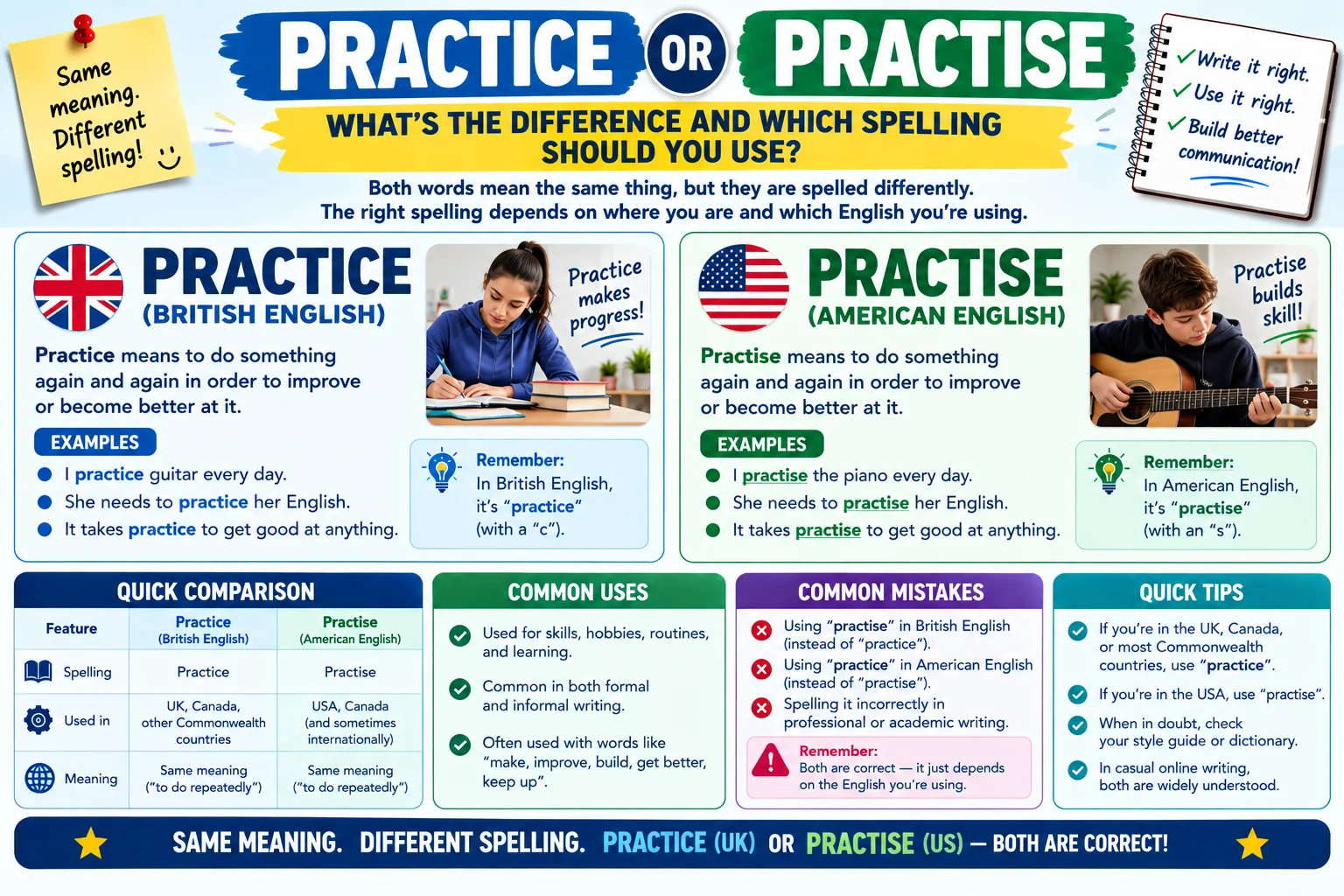
The simple answer is:
- American English: Always use practice for both the noun and the verb.
- British English: Use practice as the noun and practise as the verb.
Examples
American English
- I need more practice before the test.
- I practice piano every evening.
British English
- I need more practice before the test.
- I practise piano every evening.
Quick Rule
- Practice = Noun
- Practise = Verb (British English only)
The Origin of Practice or Practise
The words practice and practise come from the Greek word praktikos, meaning “fit for action.” The word later passed through Latin and Old French before becoming part of English.
In earlier English, the spellings changed many times. Over time, British English developed a rule that separates the noun from the verb.
- Practice became the noun.
- Practise became the verb.
American English later simplified the language by keeping only practice for both meanings. This made spelling easier and reduced confusion for American writers.
Today, both spellings are correct, but the correct choice depends on which form of English you use.
British English vs American English Spelling
The biggest difference is how each version of English treats the verb.
| Feature | British English | American English |
|---|---|---|
| Noun | Practice | Practice |
| Verb | Practise | Practice |
| Example (Noun) | Medical practice | Medical practice |
| Example (Verb) | Practise every day | Practice every day |
Examples
British English
- She will practise the speech tonight.
- His medical practice is very busy.
American English
- She will practice the speech tonight.
- His medical practice is very busy.
Easy Memory Trick
Think of advise and advice.
- Advise = Verb
- Advice = Noun
British English follows a similar pattern:
- Practise = Verb
- Practice = Noun
Which Spelling Should You Use?
The correct spelling depends on your audience.
If Your Readers Are in the United States
Use practice for everything.
Examples:
- Practice speaking English.
- Basketball practice starts at 5 PM.
If Your Readers Are in the United Kingdom
Use:
- Practice for nouns.
- Practise for verbs.
If Your Readers Are in Australia, New Zealand, Ireland, or Other Commonwealth Countries
Most publishers follow British English.
Use:
- Practice (noun)
- Practise (verb)
If Your Audience Is Global
Choose one style and stay consistent throughout your writing. Mixing British and American spelling looks unprofessional.
Common Mistakes with Practice or Practise
Many writers make these mistakes.
| Incorrect | Correct | Why |
|---|---|---|
| I need to practice more. (British English) | I need to practise more. | Verb in British English |
| My practise is growing. | My practice is growing. | Noun always uses practice |
| We practise football every day. (American English) | We practice football every day. | Americans use practice only |
| Practice makes perfect. | Correct | Practice is a noun here |
Tips
- Ask yourself if the word is an action.
- If you write British English and it is an action, use practise.
- Otherwise, use practice.
Practice or Practise in Everyday Examples
American English:
Please practice the presentation before tomorrow’s meeting.
British English:
Please practise the presentation before tomorrow’s meeting.
News
- The football team held an afternoon practice session.
- Doctors at the medical practice welcomed new patients.
Social Media
- Time to practice every day!
- I practise yoga every morning. (British English)
Formal Writing
- Regular practice improves performance.
- Students should practise writing essays daily. (British English)
Practice or Practise – Google Trends & Usage Data
Search interest shows that both spellings are popular, but their use depends on location.
| Country | Most Common Spelling |
|---|---|
| United States | Practice |
| Canada | Mostly Practice |
| United Kingdom | Practice (noun), Practise (verb) |
| Australia | Practice (noun), Practise (verb) |
| New Zealand | Practice (noun), Practise (verb) |
Usage by Context
| Context | Preferred Spelling |
|---|---|
| American schools | Practice |
| British schools | Practice / Practise |
| Business writing (US) | Practice |
| Business writing (UK) | Practice / Practise |
| Academic writing | Follow your chosen style guide |
The difference is based on regional spelling rules rather than meaning. Search volume for both words remains high because learners often want to know which spelling is correct.
Practice or Practise Comparison Table
| Feature | Practice | Practise |
|---|---|---|
| Part of Speech | Noun | Verb (British English) |
| American English | Yes | No |
| British English | Yes | Yes |
| Means Repeated Training | Yes | Yes (action) |
| Used in Medical Practice | Yes | No |
| Used as an Action | American English only | British English only |
FAQs
1. Is it practice or practise?
Both are correct. American English uses practice for both noun and verb. British English uses practice as the noun and practise as the verb.
2. Why does British English use practise?
British English separates the noun and verb with different spellings to make their functions clearer.
3. Is practice always a noun?
No. In American English, practice is both a noun and a verb.
4. Is practise wrong in America?
Yes. Standard American English uses practice instead.
5. Which spelling should students use?
Use the spelling required by your school, university, or style guide.
6. How can I remember the difference?
In British English:
- Practice = Noun
- Practise = Verb
Remember that the S in practise matches other British verbs ending in -ise.
7. Can I mix both spellings in one article?
No. Choose either American English or British English and use it consistently.
Conclusion
The difference between practice and practise is simple once you know which version of English you are using. In American English, practice is always the correct spelling, whether the word is a noun or a verb. In British English, practice is the noun, while practise is the verb. This small spelling difference helps British readers quickly recognize whether the word refers to an activity or the act of doing something.
When writing for an international audience, decide whether you will use American or British English before you begin. Staying consistent throughout your document is more important than switching between styles. If your audience is mainly in the United States, use practice everywhere. If you write for readers in the United Kingdom or many Commonwealth countries, follow the noun-and-verb rule by using practice and practise correctly. By applying these simple guidelines, your writing will be clearer, more professional, and easier for your audience to understand.
Wonder or Wander: What’s the Difference and Which Word Should You Use?

I am an English Literature expert and professional content writer with a passion for language, grammar, and effective communication. I specialize in creating well-researched, reader-friendly articles on English usage, spelling, vocabulary, writing techniques, and literary topics. My goal is to simplify complex concepts and provide accurate, engaging content that helps readers strengthen their language skills and communicate with confidence.