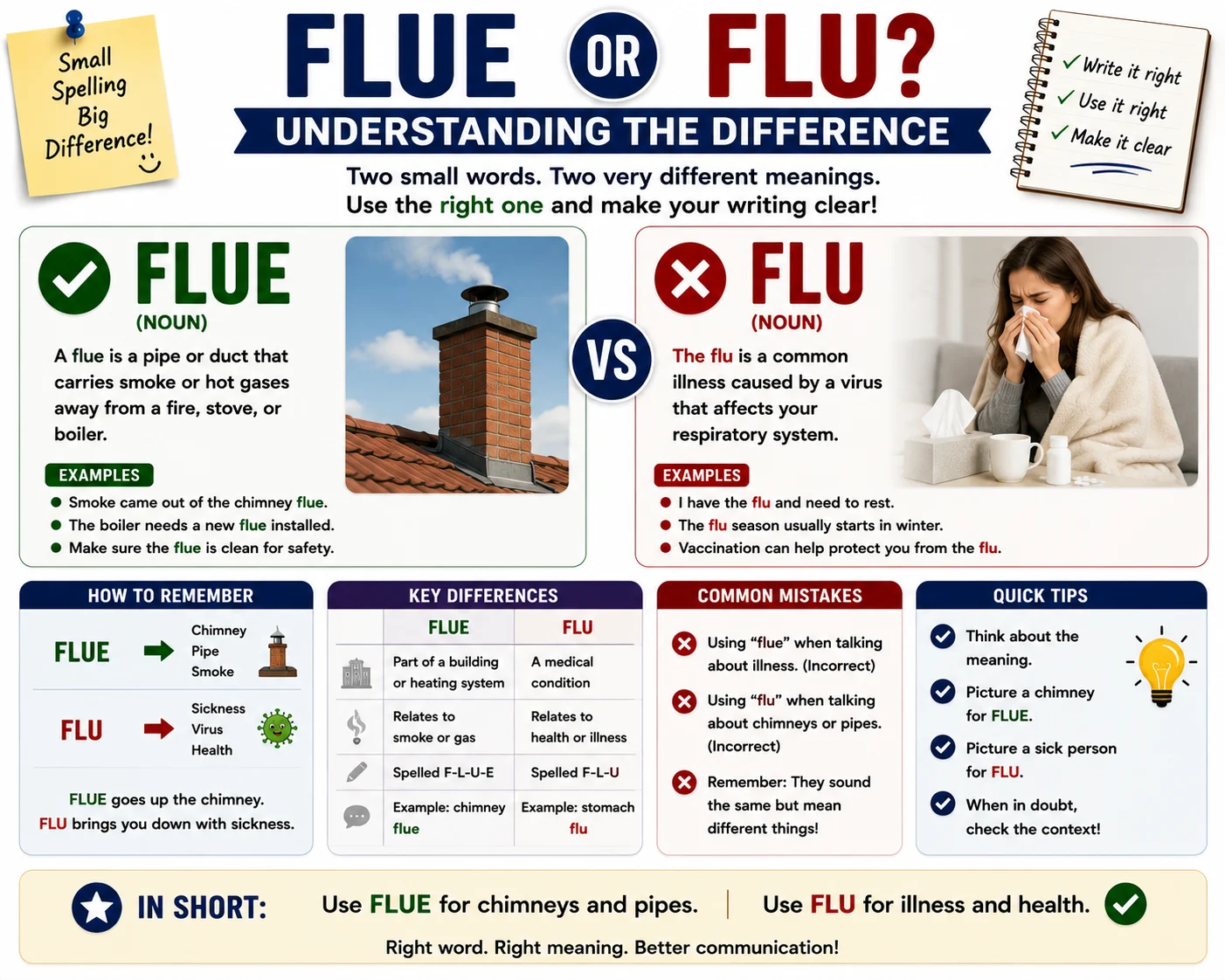
Have you ever searched for “flue or flu” and wondered which word is correct? These two words look almost identical, but they have completely different meanings. The confusion is common because only one letter separates them, yet using the wrong word can change the meaning of a sentence completely.
People search for this keyword when writing emails, school assignments, medical content, news articles, or everyday messages. They often want to know whether they are talking about an illness or a part of a building. The word flu usually refers to the illness caused by influenza viruses, while flue usually refers to a pipe or passage that carries smoke or gases away from a fireplace, stove, or furnace.
This guide explains the difference between flue or flu in simple language. You will learn where each word comes from, how spelling and pronunciation work, which word to use in different situations, common mistakes, and examples from everyday writing. By the end, you will never confuse these two words again.
Flue and flu are both correct words, but they have different meanings.
- Flu = a short form of influenza, a sickness caused by a virus.
- Flue = a tube or passage that carries smoke, heat, or gases away from a fire or heating system.
Examples
- I stayed home because I had the flu.
- The chimney flue needs cleaning before winter.
A simple way to remember:
Flu = illness
Flue = chimney or smoke passage
The Origin of Flue or Flu
The word flu comes from influenza, an Italian word meaning “influence.” The term became popular in English during the 18th century when people believed illnesses were influenced by stars, weather, or other forces.
Over time, influenza was shortened to flu for everyday use.
The word flue has a different history. It comes from older French and Latin roots connected with flowing air. A flue allows smoke, heat, and gases to flow out of a building safely.
Although the words sound the same, they developed from different languages and have different meanings.
British English vs American English Spelling
There is no major spelling difference between British English and American English for these words.
Both countries use:
- Flu for influenza.
- Flue for a smoke passage or chimney channel.
The difference is not spelling. The difference is meaning and context.
| Word | British English | American English | Meaning |
|---|---|---|---|
| Flu | Flu | Flu | Influenza illness |
| Flue | Flue | Flue | Smoke or gas passage |
| Influenza | Influenza | Influenza | Full medical term |
Examples
British English:
- “She caught the flu last week.”
- “The fireplace flue needs repair.”
American English:
- “He got the flu after traveling.”
- “The furnace flue must be inspected.”
Which Spelling Should You Use?
Unlike many English spelling differences, flue or flu does not depend on your country.
The correct choice depends on what you mean.
Use Flu When:
- Talking about a viral illness.
- Writing medical information.
- Discussing health problems.
Examples:
- Flu symptoms include fever and tiredness.
- The doctor confirmed that he had the flu.
Use Flue When:
- Talking about fireplaces.
- Discussing heating systems.
- Writing about construction or home repairs.
Examples:
- The chimney flue is blocked.
- The technician checked the furnace flue.
For global writing, always choose the word based on meaning, not location.
Common Mistakes with Flue or Flu
Mistake 1: Using “flue” for sickness
❌ I caught the flue yesterday.
✅ I caught the flu yesterday.
Mistake 2: Using “flu” for a chimney part
❌ The chimney flu is damaged.
✅ The chimney flue is damaged.
Mistake 3: Thinking they are spelling variations
❌ Flu is the American spelling and flue is British spelling.
✅ They are different words with different meanings.
Mistake 4: Confusing pronunciation with meaning
Both words sound the same, but context tells you which one to use.
Flue or Flu in Everyday Examples
Health message:
“Please stay home if you have the flu and return when you feel better.”
Home repair message:
“The technician will inspect the fireplace flue tomorrow.”
News
Health:
“Health officials reported an increase in flu cases during winter.”
Building:
“Experts warned that blocked chimney flues can create safety risks.”
Social Media
Health post:
“Getting a flu shot can help protect against seasonal influenza.”
Home improvement post:
“Cleaning your chimney flue keeps your fireplace safe.”
Formal Writing
Medical report:
“The patient showed symptoms of the flu.”
Construction report:
“The building inspection found damage to the heating system flue.”
Flue or Flu – Google Trends & Usage Data
Search interest for flu is much higher worldwide because millions of people search for health information, symptoms, vaccines, and seasonal outbreaks.
The word flu receives high search volume in countries such as:
- United States
- United Kingdom
- Canada
- Australia
- India
The word flue has lower search volume and is mainly used in topics related to:
- Home repairs
- Fireplaces
- Heating systems
- Construction
- Safety inspections
For SEO content, the correct keyword depends on the topic. Health websites should focus on flu, while home improvement websites may target flue.
Flue vs Flu Comparison Table
| Feature | Flu | Flue |
|---|---|---|
| Meaning | Influenza illness | Smoke or gas passage |
| Category | Medical term | Building part |
| Pronunciation | Same | Same |
| Origin | Short form of influenza | Related to airflow passages |
| Common Topics | Health, medicine, vaccines | Chimneys, fireplaces, furnaces |
| Example | “I have the flu.” | “Clean the flue.” |
Frequently Asked Questions
1. Is flue or flu the correct spelling?
Both are correct. They have different meanings.
2. Is flu short for influenza?
Yes. Flu is a shortened form of influenza.
3. Is a flue part of a chimney?
Yes. A flue is a passage that carries smoke and gases away from a fire or heating system.
4. Do flu and flue sound the same?
Yes. They are homophones, meaning they sound the same but have different meanings.
5. Is flue the British spelling of flu?
No. They are separate words, not regional spellings.
6. How can I remember the difference?
Remember:
Flu makes you sick. Flue lets smoke flow.
7. Which word should I use in medical writing?
Use flu when writing about influenza or illness.
Conclusion
The difference between flue or flu is simple once you understand the meaning behind each word. Flu refers to influenza, a common viral illness that affects people around the world. Flue refers to a passage that carries smoke, heat, or gases from a fireplace, chimney, or heating system. Although they sound the same, they are not interchangeable.
Both British and American English use the same spellings, so the choice does not depend on location. The key is understanding the context. If you are writing about health, symptoms, or vaccines, use flu. If you are writing about fireplaces, chimneys, or heating equipment, use flue.
Using the correct word improves clarity and prevents misunderstandings in emails, articles, reports, and professional writing. When you remember that flu affects people and flue carries gases, you can choose the right word every time.
Grimey or Grimy: Which Spelling Is Correct?

I am an English Literature expert and professional content writer with a passion for language, grammar, and effective communication. I specialize in creating well-researched, reader-friendly articles on English usage, spelling, vocabulary, writing techniques, and literary topics. My goal is to simplify complex concepts and provide accurate, engaging content that helps readers strengthen their language skills and communicate with confidence.