Have you ever described messy hair, a wild garden, or a neglected room and wondered, “Should I use unkept or unkempt?” This small spelling question causes confusion for many English writers. Both words look similar, and both seem to mean something that is not properly cared for. However, they are not always used in the same way.
People search for “unkept or unkempt” because they want to choose the right word for emails, essays, reports, and everyday conversations. Using the wrong form can make writing sound less natural or unclear.
The confusion comes from the similar spelling and meaning of these words. While unkempt is the common and widely accepted word for describing a messy or untidy appearance, unkept has a different meaning related to something that was not maintained, kept, or fulfilled.
This guide explains the difference between unkept and unkempt, their origins, spelling rules, common mistakes, and examples. By the end, you will know exactly which word to use and when.
Both words are correct, but they have different meanings.
Unkempt
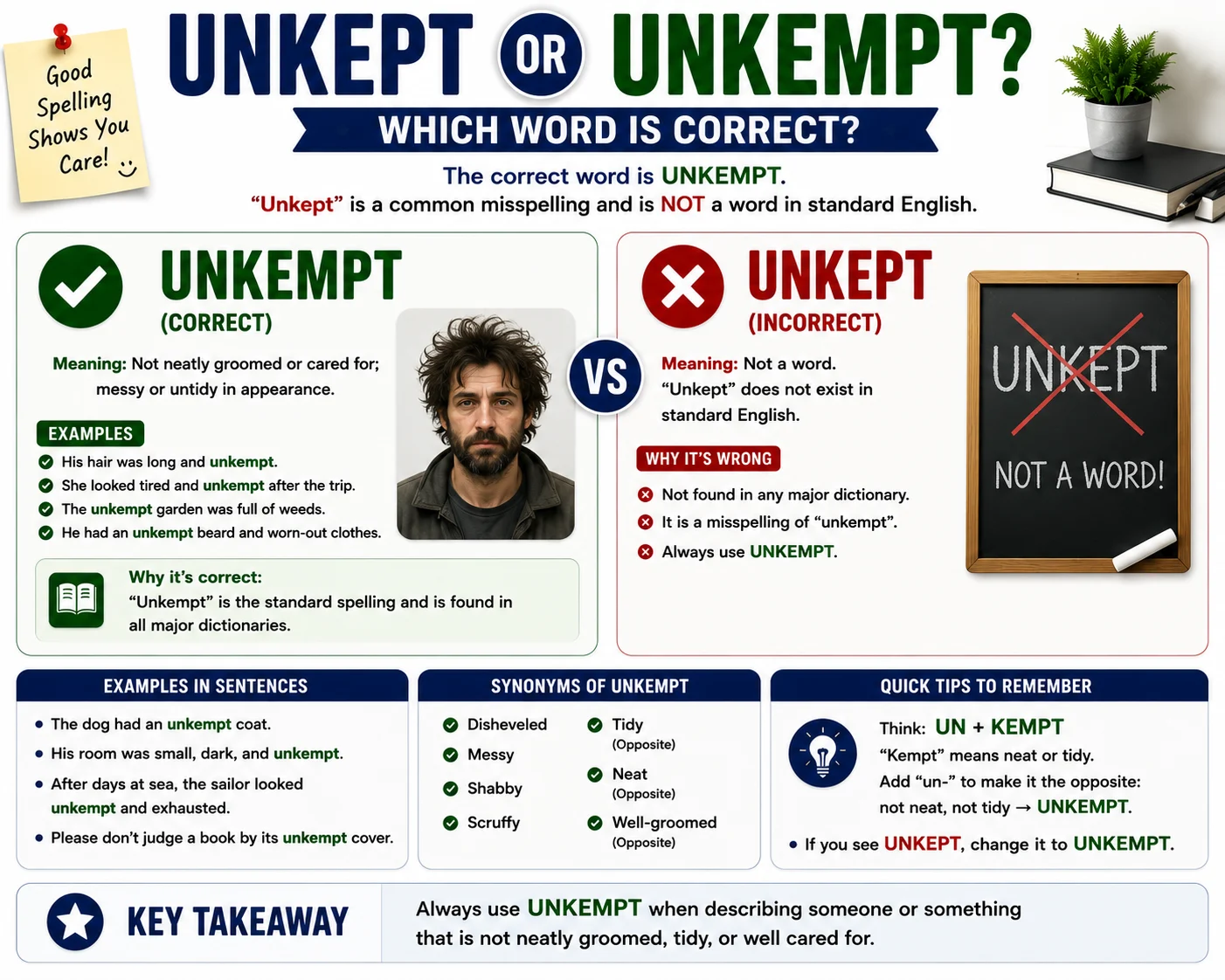
Unkempt means messy, untidy, or not cared for, especially a person’s appearance, hair, or surroundings.
Examples:
- He arrived with unkempt hair.
- The garden looked unkempt after months without care.
- She wore an unkempt outfit.
Unkept
Unkept means not kept, not maintained, or not fulfilled.
Examples:
- The promise remained unkept.
- The old building was unkept for years.
- The agreement was left unkept.
Quick rule:
- Use unkempt for messy appearance or poor condition.
- Use unkept for something not maintained or not honored.
The Origin of Unkept or Unkempt
The word unkempt comes from Old English. It is formed from:
- un- meaning “not”
- kempt meaning “combed” or “tidy”
The word kempt comes from an old form of the verb comb. Originally, unkempt described hair that was not combed. Over time, its meaning expanded to include anything messy, neglected, or disorderly.
The word unkept comes from the verb keep. It means something that was not kept, cared for, protected, or completed.
The spelling difference exists because the words come from different roots:
- unkempt → from combing and appearance
- unkept → from keeping and maintaining
Although they look similar, they developed separate meanings.
British English vs American English Spelling
British English and American English use the same spellings for both words.
There is no spelling change between the two varieties.
| Feature | British English | American English |
|---|---|---|
| Messy appearance | unkempt | unkempt |
| Not maintained | unkept | unkept |
| Incorrect spelling | unkemptt | unkemptt |
| Usage difference | Same meaning | Same meaning |
Examples in Both Varieties
British English:
- His hair looked unkempt.
- The promise was left unkept.
American English:
- His hair looked unkempt.
- The promise was left unkept.
The difference is not regional. It is about meaning.
Which Spelling Should You Use?
Your choice depends on what you want to describe.
For US Readers
Use:
- unkempt for messy people, hair, clothes, or places.
- unkept for promises, duties, agreements, or maintenance.
For UK and Commonwealth Readers
The same rule applies:
- unkempt = untidy
- unkept = not kept or maintained
For a Global Audience
Use unkempt when describing appearance because it is the more common word. Use unkept when the meaning relates to something that was not fulfilled or maintained.
Choosing the correct word makes your writing clearer and more professional.
Common Mistakes with Unkept or Unkempt
Mistake 1: Using unkept for messy hair
Incorrect:
❌ His hair looked unkept.
Correct:
✅ His hair looked unkempt.
Mistake 2: Using unkempt for broken promises
Incorrect:
❌ She made an unkempt promise.
Correct:
✅ She made an unkept promise.
Mistake 3: Thinking the words are interchangeable
Although they look similar, they describe different ideas.
- An unkempt room = a messy room.
- An unkept agreement = an agreement that was not followed.
Unkept or Unkempt in Everyday Examples
“The office space has become unkempt and needs cleaning.”
“The original deadline was an unkept promise.”
News Writing
“The abandoned property appeared unkempt after years without repairs.”
“The official faced criticism for an unkept election promise.”
Social Media
“My hair is completely unkempt after a long travel day.”
Formal Writing
“The report highlights the effects of an unkept commitment.”
“The building’s unkempt appearance reduced its value.”
Unkept or Unkempt – Google Trends & Usage Data
Searches for “unkept or unkempt” are common because English learners and writers often confuse these similar-looking words.
The phrase is searched most often in countries where English is widely used, including:
- United States
- United Kingdom
- Canada
- Australia
- India
The word unkempt receives more searches because people often use it to describe:
- messy hair
- poor appearance
- neglected places
- untidy clothing
The word unkept appears more often in formal contexts involving:
- promises
- agreements
- responsibilities
- rules
Understanding the context helps users choose the correct word.
Keyword Comparison Table
| Word | Correct? | Meaning | Example |
|---|---|---|---|
| unkempt | ✅ Yes | Messy, untidy, neglected appearance | His beard looked unkempt. |
| unkept | ✅ Yes | Not kept, maintained, or fulfilled | The promise remained unkept. |
| unkempted | ❌ No | Incorrect form | Do not use it. |
| unkepted | ❌ No | Incorrect form | Do not use it. |
Frequently Asked Questions
Is unkempt the same as unkept?
No. Unkempt means messy or untidy. Unkept means not maintained or not fulfilled.
Is unkept a real word?
Yes. It is a correct word used for things like promises, agreements, and responsibilities.
Which word should I use for messy hair?
Use unkempt.
Example: Her hair was unkempt.
Which word should I use for a broken promise?
Use unkept.
Example: The promise was unkept.
Are unkept and unkempt spelled differently in British English?
No. Both spellings are the same in British and American English.
Can I use unkempt for a house?
Yes. An unkempt house means a house that is messy or poorly cared for.
Why do people confuse unkept and unkempt?
They look similar and both suggest a lack of care, but they come from different words and have different meanings.
Conclusion
The difference between unkept and unkempt is simple once you understand their meanings. Unkempt describes something messy, untidy, or neglected, especially hair, clothing, appearance, or places. Unkept describes something that was not kept, maintained, completed, or honored, such as a promise or agreement.
Both words are correct, and neither is a spelling mistake. The key is choosing the word that matches the situation. If you are describing a messy person or place, use unkempt. If you are describing something that was not fulfilled or cared for, use unkept.
This rule works in American English, British English, and global English writing. Using the right word improves clarity and helps your writing sound more natural. Whether you are writing a professional email, an article, a report, or a social media post, knowing the difference between these two words will help you communicate your meaning clearly.
Grimey or Grimy: Which Spelling Is Correct?

I am an English Literature expert and professional content writer with a passion for language, grammar, and effective communication. I specialize in creating well-researched, reader-friendly articles on English usage, spelling, vocabulary, writing techniques, and literary topics. My goal is to simplify complex concepts and provide accurate, engaging content that helps readers strengthen their language skills and communicate with confidence.